I suspect gnosis comes as 'grace' because there are as many different forms of it as there are people. Yet because we're all in this together, sharing experience is integral to its fullness. Whatever experiments you make, share your 'failures', your hints and guesses, and your awakening too if it happens, with warts-and-all honesty, because 'everything that lives is holy'.
John Wren-Lewis
Last time I wrote about finding the writings of John Wren-Lewis. Two quotes stick with me.
The one above went home because I struggle with writing this blog. On one hand, I’m beginning to realize I’m here and have the time, so why not babble? But too, it often seems sheer foolishness. However, I’ve had this half baked notion that perhaps my ramblings might be of some small help, and here Wren-Lewis spoke to that.
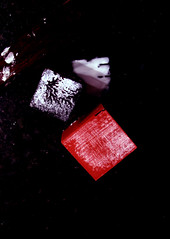
The second quote is from an essay about G.K. Chesterton. I like it as it touches upon, so exactly, the simplicity of seeing that amazes me – as something as simple as “squareness” that can stop me in my tracks, completely stunned by the light pouring through.
Everything his eye fell on it feasted on, not aesthetically, but with a plain, jolly appetite as of a boy eating buns. He relished the squareness of the houses; he liked their clean angles as if he had just cut them with a knife.
G.K. Chesterton, in Joy Without a Cause, by John Wren-Lewis
I appreciate these words as they come as something of an encouragement in this process I’ve undertaken of … what… “being with the witness?” I have the habit of dismissing the strangeness of a very awake witness as the consequence of aberrant physiology – hypoglycemia, some unspecified toxicity, or low grade migraine. I have come up with many excuses. But, to have my attention pointed towards a less controversial experience, the innocent delight in squareness for example, encourages me to interpret the witness in terms of a legitimate refinement in consciousness. Or, in other words to stop “un-enlightening myself.”
Actually, I want to get back to more a direct discussion of working with witnessing. But for now, let me end with more words of John Wren-Lewis:
…while there are mystical traditions the world over which offer 'paths to higher consciousness', it doesn't seem to me that any of them has a very encouraging success rate…
My experience… suggests that liberation isn't at all a matter of taking 'the long voyage Home'.
It simply means waking up to the consciousness which is already the basis of our very existence…
What I suspect we need is not any kind of path or discipline, but a collection of tricks or devices for catching the Dark at the corner of the eye, as it were, and learning how to spot its just-waiting-to-be-seen presence, combined with strategies for stopping the hyperactive [mind] from immediately explaining the perception away. ..
Against this background, the main positive advice I would give to spiritual seekers is to experiment with any practice or idea that seems interesting - which is what the Buddha urged a long time ago, though not too many of his followers have ever taken that part of his teaching seriously…
John Wren-Lewis