Showing posts with label Christa Tippett. Show all posts

Sunday, January 13, 2008

The Barchester Chronicles


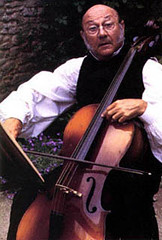
Septimus Harding
Originally uploaded by
Seeking Tao

Mr. Harding is a small man, now verging on sixty years, but bearing few signs of age; his hair is rather grizzled, though not grey; his eye is very mild, but clear and, bright, though the double glasses which are held swinging from his hand, unless when fixed upon his nose, show that time has told upon his sight; his hands are delicately white, and both hands and feet are small; he always wears a black frock coat, black knee-breeches, and black gaiters, and somewhat scandalises some of his more hyper-clerical brethren by a black neck handcherchief.
Anthony Trollope

Last night I discovered the 1982 BBC production of Anthony Trollope’s The Warden and Barchester Towers.

I was delighted and intrigued by the character of Spetimus Harding described here in an essay by John Lett.

Trollope wasn't greatly interested in Christianity. But he did give us here something which is very rare: a portrait in literature of a really good man, which isn't boring. The Warden, The Reverend Septimus Harding, may not be a very good clergyman; but he is rather a good saint, a true Christian, and absolutely convincing. He loves the cathedral, and the music in the cathedral. He loves his daughters and his little flock in the Hospital, the bedesmen of the almshouse. He has an absolutely instinctive understanding that God is love, and I am tempted to say that that is almost all the religion he knows.

I was intrigued also by how the Warden, when upset and forced to speak his mind, moves his left hand over his heart and there unconsiously fingers the strings of the cello he so loves, while his right hand draws a nonexistent bow adamently back and forth. When traumatized, music swells within this man.

At one point, after confronting the Attorney General of England, Sir Abraham Haphazard, Septimus finally expending all he has to say, looks down at his hands and apologizes for the strange mannerism.
To me, this last gesture only demonstrates Septimus' sanity and self awareness.

But, I sat bolt upright in my rocker when Septimus Harding in the depths of his struggling with the morally of his part of the right and wrongs of Life uttered these words:

“I know that ultimately we cannot understand. But, I also know that we must try.”

The loud clap of Adyashanti describing the nature of enlightenment seemed to jerk me up and I hit the pause button and wrote down the words. Yes.

The Nothing that is Everything is beyond our comprehension.
Living in the present moment we know zippo about what will unfold next.
But, we have to live out this kind of balancing act,
for in the next moment the non-existent future will be here...

So, Sunday morning I am at the computer trying to share some of this mystery, and as you know my Sunday routine includes the radio – ostensibly for some classical music.
But, come 7 a.m. Christa Tippett’s Speakiing of Faith puts an end to that.

Listen to what’s playing in the other room:

I am looking on benches and streets, in logic and code. I am looking in the form of truth stripped to the bone. Truth that lives independently of us, that exists out there in the world. Hard and unsentimental. I am ready to accept truth no matter how alarming it turns out to be. Even if it proves incompleteness and the limits of human reason. Even if it proves we are not free.
(Janna Levin)

In 1931, Gödel shook the worlds of mathematics, philosophy, and logic with his incompleteness theorems. He showed that some mathematical truths can never be proven or, as he says in Janna Levin's novel, that mathematics is perfect, but it is not complete.

To see some truths, you must stand outside and look in. This notion also held deeply unsettling human implications. It posited hard limits to what any of us can ever logically, definitively know. (Christa Tippett)

The program then continued…
MS. TIPPETT: …how does the messiness of just of experience… not just …what we can know, but just how life unfolds, how does that impinge on, kind of, the ultimate reality of what we can know and achieve…

MS. LEVIN: … we should never turn away from what nature has to show us, … we should never pretend we don't see it, because it's too difficult to confront... I don't understand other attitudes that want to disregard certain discoveries because they don't jell with their beliefs. … one of the painful but beautiful things about being a scientist is being able to say, 'It doesn't matter what I believe. I might believe that the universe is a certain age, but if I'm wrong, I'm wrong.'
There's something really…thrilling about being committed to that.

Which is just another way of coming around to Adyashanti’s insistence that spiritual inquiry requires dedication to “What’s really True.”

Even though we cannot really know – at least not with our intellects.
But we have to try. Because
The Truth is what we are.
The Truth is what’s looking out our eyes.
Septimus Harding, knew this.

Sunday, December 30, 2007

Tikkun Olam


He sees you
Originally uploaded by Seeking Tao
This Sunday morning, 7 a.m., found me in my usual place,
on my yoga mat, in front of my altar,
doing a combination of asanas, back exercises, calisthenics
and wrestling with Bennie.

On the radio, Christa Tippett was speaking with Dr. Rachael Naomi Remen, in a program entitled Listening Generously.

DR. REMEN: [My grandfather] was a flaming mystic, and he was also a magnificent storyteller.

MS. TIPPETT: What do you mean when you say he was a flaming mystic?

DR. REMEN: …it means many different things. It can mean a scholarly thing, like the study of a school of mysticism like Kabbalah, but it's also a way of seeing the world.
My grandfather felt that the world was in constant communication with him,
that there was a spirit in the world,
a God in the world that could be spoken to and could respond at all times,
that there was a presence in the world that was holy and sacred and that he was in constant dialogue with this as he went through the events of his day.

I think mysticism can be defined in many different ways.
I didn't know that my grandfather was a mystic.
… I just knew that the world that he lived in was the world I wanted to live in, too.

MS. TIPPETT: You recount this idea of the Kabbalah,… that at the beginning of the creation, the holy was broken up…

DR. REMEN: …this was my fourth birthday present, this story.

In the beginning there was only the holy darkness, the Ein Sof, the source of life. And then, in the course of history, at a moment in time, this world, the world of a thousand thousand things, emerged from the heart of the holy darkness as a great ray of light.
And then, perhaps because this is a Jewish story, there was an accident, and the vessels containing the light of the world, the wholeness of the world, broke.
And the wholeness of the world, the light of the world was scattered into a thousand thousand fragments of light, and they fell into all events and all people, where they remain deeply hidden until this very day.

Now, according to my grandfather, the whole human race is a response to this accident. We are here because we are born with the capacity to find the hidden light in all events and all people, to lift it up and make it visible once again and thereby to restore the innate wholeness of the world.
It's a very important story for our times.
And this task is called tikkun olam in Hebrew.
It's the restoration of the world.

…And this is, of course, a collective task.
It involves all people who have ever been born, all people presently alive, all people yet to be born.
We are all healers of the world.
And that story opens a sense of possibility.
It's not about healing the world by making a huge difference.
It's about healing the world that touches you, that's around you….

It's a very old story, comes from the 14th century, and it's a different way of looking at our power… I'm not a person who is a political person in the usual sense of that word,
but I think that we all feel that we're not enough to make a difference,
that we need to be more somehow,
either wealthier or more educated or somehow or other different than the people we are.

And according to this story, we are exactly what's needed.
And to just wonder about that a little,
what if we were exactly what's needed?
What then?
How would I live if I was exactly what's needed to heal the world?

Wednesday, December 26, 2007

Christmas with Jean Vanier

My Sunday morning routine of asanas accompanied by classical music changed when our local Public Broadcasting radio station changed its schedule.

Now, rather than music, I am more likely to be listening to Christa Tippett’s program, “Speaking of Faith.” That’s OK. After all, it is Sunday.

The Sunday before Christmas brought up what I thought was a “repeat.” I’d already heard one show on Jean Vanier and the L’Arche community. So, there was a bit of internal grumbling as I stretched into the next asana.

But if this was a repetition, I hadn’t really listened before.
Or more likely, I wasn’t ready to hear before.
But, I stopped my yoga mid-posture when I heard these word:

You see, the big thing for me is to love reality and not live in the imagination, not live in what could have been or what should have been or what can be, and somewhere, to love reality and then discover that God is present.
Jean Vanier

Oh!
I would like to do this too.

And I would like to share some snippets of transcript (edited a bit for a smoother read) as my belated Christmas message.

MS. TIPPETT: … in 1963, Jean Vanier was a professor of philosophy at St. Michael's College in Toronto. At Christmas time that year, he went to visit a friend in France who was working as a chaplain for men with mental handicaps. Vanier found himself drawn to these human beings shut away from society. He was especially moved by a vast asylum south of Paris in which all day, 80 adult men did nothing but walk around in circles and take a two-hour compulsory nap. He bought a small house nearby and invited two men from that asylum to share life with him…
MR. VANIER: …I come back to the reality of pleasure and to the reality of what is my deepest desire and what is your deepest desire.
And … the deepest desire for us all is to be appreciated, to be loved, to be seen as somebody of value.
But not just seen —
Aristotle makes a difference between being admired and being loved. When you admire people, you put them on pedestals. When you love people, you want to be together.
So really, the first meeting I had with people with disabilities, what touched me was their cry for relationship.
Some of them had been in a psychiatric hospital.
All of them had lived pain and the pain of rejection.
One of the words of Jesus to Peter — and you find this at the end of the gospel of Saint John — "Do you love me?"

MS. TIPPETT: All kinds of pain and weakness are difficult for us as human beings. Why is that so excruciating? Why do we do such a bad job with it?
MR. VANIER: … First of all, we don't know what to do with our own pain, so what to do with the pain of others?
We don't know what to do with our own weakness except hide it or pretend it doesn't exist.
So how can we welcome fully the weakness of another if we haven't welcomed our own weakness?
There are very strong words of Martin Luther King. His question was always, how is it that one group — the white group — can despise another group, which is the black group? And will it always be like this? Will we always be having an elite condemning or pushing down others that they consider not worthy?
And he says something, which is quite, what I find extremely beautiful and strong…
we will continue to despise people until we have recognized, loved, and accepted what is despicable in ourselves.
So then we go down, what is it that is despicable in ourselves?
And there are some elements despicable in ourselves, which we don't want to look at,
but which are part of our natures, that we are mortal… [and too]

We are very fragile in front of the future.
Accidents and sicknesses is the reality.
We are born in extreme weakness and our life will end in extreme weakness.
So this, people don't want to hold on to that.
They want to prove something. They want security. They want to have big bank accounts and all that sort of stuff.
So then also, a whole lots of fear is within us.

MS. TIPPETT: I know you've written that, from the point of view of faith, those who are marginalized and considered failures can restore balance to our world. …
MR. VANIER: The balance of our world frequently is seen as a question of power.
That if I have more power and more knowledge, more capacity, then I can do more.
…and when you have power, we can very quickly push people down.
I'm the one that knows and you don't know,
and I'm strong and I'm powerful, I have the knowledge.
And this is the history of humanity.

"As we share our lives with the powerless, we are obliged to leave behind our theories about the world, our dreams and our beautiful thoughts about God, to become grounded in a reality that can be quite harsh." Jean Vanier

MS. TIPPETT: …So I asked Jean Vanier how does he think about the nature of God and of Jesus as he approaches his 80s.
MR. VANIER: My experience today is much more the discovery of how vulnerable God is.
You see, God is so respectful of our freedom.
And if, as the Epistle of John says, God is love, anyone who has loved in their life knows they've become vulnerable.
Where are you and the other person and do you love me back?
So if God is love, it means that God is terribly vulnerable.
And [too] God doesn't want to enter into a relationship where He's obliging or She is obliging us to do something.
The beautiful text in the Apocalypse, the Book of Revelations: "I stand at the door and I knock. If somebody hears me and opens the door, then I will enter."
What touches me there is God knocking at the door, not kicking the door down, but waiting.
Do you, will you open?
Do you hear me?
Because we're in a world where there's so much going on in our heads and our hearts and anxiety and projects that we don't hear God knocking at the door of our hearts.
So I'd say that what touches me the deepest, maybe because I'm becoming myself more vulnerable, is the discovery of the vulnerability of God, who doesn't oblige.

MS. TIPPETT: And, of course, one implication of the vulnerable God, of honor in human freedom is precisely this dark side that we've been talking about,
that human beings cause each other pain, dominate, and destroy.
And so, I'm kind of coming back at you with the question of still, if God is God, is that enough to honor our freedom?
MR. VANIER: …there are so many things we don't know.
And, I just have to honor what I don't know.
— there are so many things I cannot explain, because explanation is something about headiness.
You won't have it in the head.
But the whole question is not to understand,
it's to be attracted to the place of pain in order to give support to those who are suffering. … if we try to know too much, it might cut us away from being present.

It's a very moving thing with St. Francis of Assisi.
St. Francis said he couldn't stand lepers.
And one can understand a disfigured leper with no nose or no ear or parts of gaping, you know?
And in the Middle Ages …20,000 leprosiums, filled with these people that smelt bad and he said, "I hated it. I couldn't stand it."
And then he said that one day, the Lord brought me into the lepers.
“And when I left, there was a new gentleness in my body and in my spirit.”

This was, what struck me, when he said, “a new gentleness in my body and in my spirit.” And it says, “From there, I really left to serve to Lord.” …
from the fear and despisal of what appeared the most dirty…
he discovered there was a presence of God.
*****************************************************

Full program information on “The Wisdom of Tenderness” can be found here.

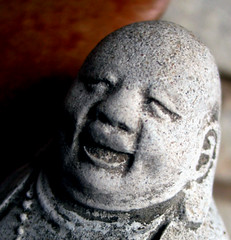
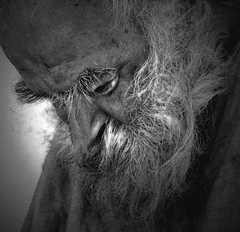
And PS – I had a hard time choosing a picture for this entry.
I wanted to post something uplifting, joyful, something that went with the Season.
I didn’t want a leper.